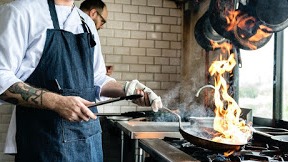
Television glorifies the culinary industry, editing out the grit and showcasing sudden success. The reality behind the pass requires unwavering dedication, physical stamina,
and a commitment to precision under extreme pressure.
The Dual Identity: Scientist and Artist
Culinary mastery sits at the intersection of rigorous science and refined artistry.
- The Scientist: Culinary technique relies on chemical interactions—understanding temperature control, emulsification, lipid behavior, and acidity balances.
- The Artist: Technical knowledge serves as the foundation for creative expression. Presentation is integral; visual composition dictates the guest’s initial sensory experience
- before the first bite.
I joined the hospitality industry 16 years ago. Since then, I’ve worked in 5 different countries, and guess what? I still feel like I’ve barely scratched the surface. I want to learn
more.
The word "Chef" actually comes from chef de cuisine, which literally means "head of the kitchen." But our job isn't just making sure the food tastes delicious. We have to create stunning presentations because guests feed their eyes first, then their stomachs. If a plate doesn't look absolutely mouth-watering, it doesn't leave the pass.
Getting to that level takes time. It’s hard work, and there are no real shortcuts. You start as a student, finish your studies, do your practical training, get an apprenticeship, and slowly—step by step—climb your way to the top. It takes years of relentless practice.
Who's Who in the Kitchen Zoo?
If you’ve ever wondered who is doing what behind those swinging doors, here is how the chain of command breaks down:
Executive Chef (Chef de Cuisine): Serves as operational director. Focuses on menu design, inventory management, financial labor costs, and departmental oversight.
Sous Chef: Functions as operational second-in-command. Manages line execution, staff supervision, and quality assurance during active service.
Chef de Partie (Station Chef): Manages a dedicated operational station (e.g., sauté, grill, garde manger), ensuring high-volume consistency within their domain.
Commis (Line Cook): Executes baseline culinary prep and line assembly, building speed and refined technical proficiency.
Culinary Apprentice / Intern: Absorbs operational workflows while assisting with foundational prep work and sanitation maintenance.
Kitchen Porter / Stewarding Team: Maintains critical biological safety, sanitation, and inventory infrastructure. Kitchen operations halt without their continuous support.
Over to You
So, knowing the brutal hours, the missing holidays, the messy clean-up, and the constant heat... why do we keep coming back to the kitchen? For me, it’s the pure adrenaline of a successful service and an absolute passion for the craft. More stories yet to come, keep reading.
Now I want to hear from you:
- If you work in the industry: What keeps your fire burning when service gets chaotic?
- If you're a dining guest: Did you realize just how intense things get behind those swinging doors?
Drop a comment below—